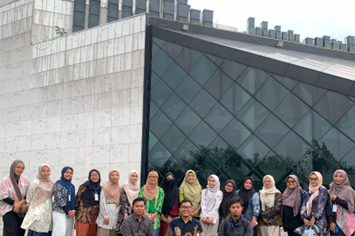
Year: 2024 | Faculty: FEB | Output status: Sedang proses penerbitan
Activity date status: Exact activity date not available in the accessible spreadsheet/public sources
Verification note: Only year 2024 is available in the spreadsheet.
Source metadata: PKM: Enhancing Digital Opportunities and Digital Literacy for Refugee Children: A Collaborative Initiative with Refugee Talent Project | Tim: Rizky Wisnoentoro, Hanifia Ihza Manila, Husny Gibreel Musa Saleh
Refugee children often face layered barriers to learning. They may experience limited access to formal schooling, uncertain legal status, language challenges, and social isolation. UIII’s community engagement project with the Refugee Talent Project addressed one important part of this challenge by expanding digital opportunities and digital literacy for refugee children.
The Faculty of Economics and Business team treated digital literacy as more than the ability to use devices. For children living in displacement, digital skills can open access to knowledge, creative expression, communication, and hope. They can also help children participate more safely and confidently in a world where education and opportunity increasingly depend on technology.
The collaboration with a community partner is especially significant. Programs for refugee children require trust, cultural sensitivity, and awareness of psychosocial conditions. A university can bring academic knowledge and resources, but community organizations often understand the daily realities of participants more closely. Together, they can design a program that is both practical and humane.
For UIII, the project reflects a global humanitarian orientation. Community engagement is not limited by nationality or citizenship status. It is grounded in the idea that every child deserves the chance to learn, grow, and imagine a future.
A feature article can highlight children discovering new possibilities through digital tools. It should include the learning activities, participant age range, partner role, and safeguards used in working with minors. Final publication should be careful with privacy and photo consent. The strongest message is that digital literacy can become a bridge between displacement and dignity when delivered through trusted collaboration.