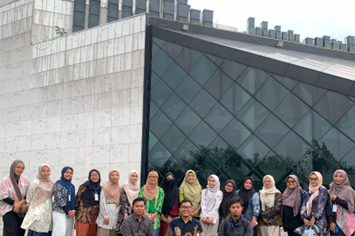
Year: 2025 | Faculty: FEB
Activity date status: Exact activity date not available in the accessible spreadsheet/public sources
Verification note: Only year 2025 is available in the spreadsheet.
Source metadata: PKM: Ecological Finance Psychology for Youth: Taking Small Steps on The Path to Sustainable Lifestyle | Tim: Hanafi Sofyan Guciano, Syamsi Mustofa Singgih Prayogo
Sustainable living is often discussed as a matter of policy or technology, but it is also shaped by everyday financial choices. What young people buy, save, invest in, and value can affect environmental outcomes. UIII’s community engagement project on ecological finance psychology for youth connected personal finance with sustainability through the idea of taking small steps toward a more responsible lifestyle.
The Faculty of Economics and Business team approached youth as a critical audience. Young people are active consumers, digital citizens, and future decision makers. Their financial behavior is influenced by peer culture, online trends, aspirations, and social pressure. Ecological finance psychology helps them reflect on how decisions that appear personal can have wider environmental consequences.
The program likely encouraged participants to think about mindful consumption, needs versus wants, saving habits, and the ethical meaning of money. It may also have connected sustainability to Islamic values of moderation and responsibility. This combination makes the topic more accessible because it links environmental concern to daily choices rather than abstract global discourse.
For UIII, the activity shows how sustainability education can be interdisciplinary. It brings together psychology, finance, youth empowerment, and environmental ethics. Such an approach fits the needs of a generation that must navigate both economic uncertainty and climate anxiety.
A feature article can highlight small behavioral changes: choosing reusable products, budgeting for sustainable choices, resisting wasteful consumption, or discussing money with greater awareness. Final publication should include participant stories and specific activities. The core message is that sustainable futures are built not only by institutions, but also by the financial habits young people begin practicing today.