Year: 2023 | Faculty: FEB
Activity date status: Exact activity date not available in the accessible spreadsheet/public sources
Verification note: Only year 2023 is available in the spreadsheet.
Source metadata: PKM: The Socio-Economic Impact of Municipal Solid Waste Management: Case Study at PT. Xaviera Global Synergy | Tim: Herbert W. V. Hasudungan, Andi Dzulfahmi Imran Hamzah, Pradanti Nolo Wigati
Urban waste is often treated as a technical problem, but its roots reach much deeper into habits, livelihoods, household decisions, and local governance. Through a community engagement project on the socio-economic impact of municipal solid waste management, Universitas Islam Internasional Indonesia (UIII) brought academic attention to an everyday issue that affects both environmental sustainability and community welfare.
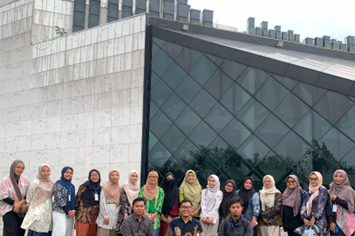
The project, conducted by a team from the Faculty of Economics and Business, focused on PT. Xaviera Global Synergy, known in the dataset as a strong example of waste-bank practice. Rather than looking at waste only as discarded material, the activity approached it as part of a wider social and economic system. It asked how households, community organizers, local enterprises, and environmental actors can work together to reduce waste while creating practical value.
A central message of the program is that waste management succeeds when communities understand both the ecological and economic logic behind it. Segregation, collection, recycling, and reuse require discipline, trust, and incentives. When those elements are in place, waste can move from being a household burden to becoming a source of learning, income, and collective responsibility.
For UIII, the activity reflects a broader commitment to linking research with social action. The university’s community engagement agenda is not only about documenting good practices, but also about translating them into knowledge that can be shared with other communities, local governments, social enterprises, and education institutions.
The draft news angle can highlight the human side of waste management: residents who change habits, community actors who sustain local systems, and academics who learn from the field. Before publication, the story would be stronger with the exact location, number of participants, quotations from community members, and visual evidence from the activity report. Even at the draft stage, however, the project already shows how UIII can contribute to sustainable cities through community-based knowledge.